Crypto Investors Face a Market Crash in 2026 as Bitcoin Slips Toward $80,000
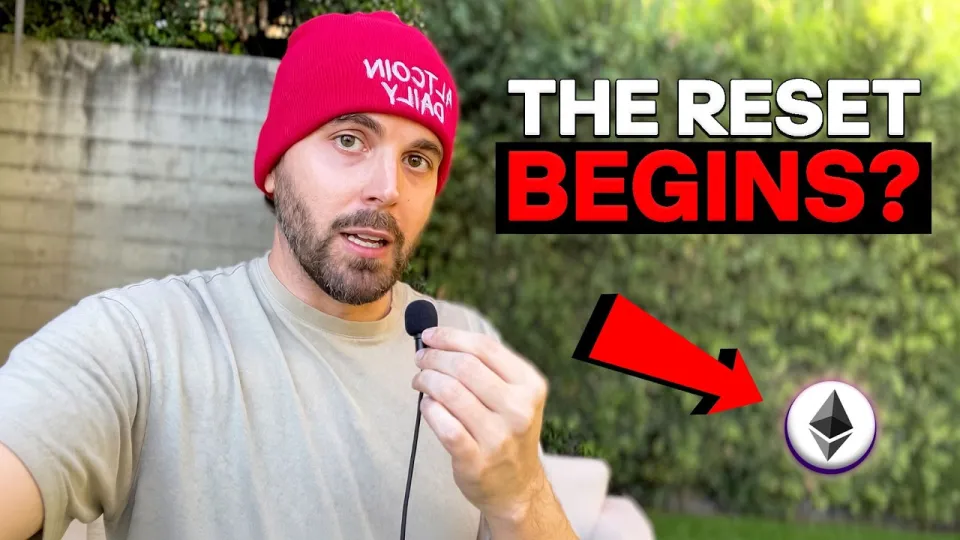
Video: Crypto Investors Are In Serious Trouble (market crash)
Want articles like this for your own video to promote it on YouTube and Google? Order them through the Telegram bot @sat_sit_bot. The bot writes and publishes the articles itself (with your YouTube video embedded) on popular topical websites (no ads). Try it free: 50 articles on us.
· based on the channel Altcoin Daily
Key takeaways
- Bitcoin traded at $80,707 as of October 24, 2026, according to a widely shared figure in the discussion around the video.
- At that price, Bitcoin's five-year compound annual growth rate works out to roughly 5.78%.
- Altcoin Daily's breakdown frames the drop as a market crash that puts crypto investors in serious trouble.
- Long-term holders in the audience describe the drawdown as an averaging-down opportunity rather than an exit signal.
- The channel points viewers to its merchandise store at altcoindailyshop.myshopify.com.
Crypto investors are in serious trouble in 2026 because Bitcoin has slid to around $80,707 and the drawdown is forcing holders to decide whether this is a crash to sit through or a cycle top to respect. In the Altcoin Daily breakdown, the drop is treated as a genuine stress test for portfolios rather than a routine red candle. The practical answer for most holders is to separate long-term conviction from short-term price action, keep cash ready for deeper levels, and avoid panic selling into a thin market.
What the crypto market crash looks like in 2026
The defining number in the discussion is $80,707 for Bitcoin as of October 24, 2026, a level that reframes the whole bull market narrative. At that price, Bitcoin's five-year compound annual growth rate is only about 5.78%, which is a sobering figure for anyone who bought the top of the last cycle expecting triple-digit annual returns. That CAGR matters more than any single daily candle: it tells you that the asset has spent years going sideways in real terms, and a crash on top of that is what makes the current situation uncomfortable for leveraged holders.
The pressure is not evenly distributed. Spot holders with multi-year horizons are down on paper but still solvent; anyone who borrowed against collateral or used high leverage on altcoins is the group actually in trouble. That distinction drives almost every decision below.
Why altcoin holders feel the crash more than Bitcoin holders
Altcoins amplify both directions, so a Bitcoin move toward $80,000 typically translates into a much deeper percentage drawdown in smaller-cap tokens. The mechanics are simple: thinner order books, more leverage, and market makers who widen spreads when volatility spikes. When Bitcoin loses a psychological level, altcoin liquidity drains first, and stop-losses cascade in assets that trade a fraction of Bitcoin's volume.
There is also a structural point raised in the discussion about cycle behavior: Bitcoin has historically printed lower lows in bear phases and higher highs each cycle, while Ethereum has not delivered the same pattern. That asymmetry is a warning against assuming every large-cap altcoin will simply repeat Bitcoin's recovery script.
A practical checklist for surviving a crypto drawdown
Surviving a crash is mostly about process, not prediction. Work through these steps in order:
- Calculate your actual exposure. Write down every position, including staked tokens, yield positions and anything used as collateral. If a liquidation price exists, it is the single most important number in your portfolio.
- Cut leverage before you cut conviction. Deleting borrowed exposure removes the scenario where you are forced to sell at the worst possible moment.
- Set staged buy levels instead of one big entry. Splitting capital across several price bands, for example three or four tranches below current levels, avoids catching a falling knife with the whole stack.
- Keep a cash buffer outside crypto. The holders who behave best in a crash are the ones who do not need to sell to cover living costs.
- Review the thesis for each altcoin. If the reason you bought it no longer exists, the drawdown is information, not just noise.
How long-term holders are treating the drop
The dominant sentiment among experienced holders is that a crash is a buying window, not an exit signal. Many describe deliberately not checking prices for weeks at a time, keeping their positions untouched and reserving new cash for deeper levels. That approach only works if the money is genuinely long-term capital and the positions are unleveraged.
Averaging down is the specific tactic most often mentioned: adding to a position at lower prices to reduce the average entry, provided the asset still passes a basic quality check. The discipline is to decide in advance how much total capital goes into each asset, so that averaging down does not quietly become over-allocation.
Questions crypto investors are asking during the selloff
Uncertainty in a crash produces a predictable set of questions. The most common is whether this is manipulation or a real trend change; the honest answer is that the distinction only becomes clear in hindsight, so position sizing has to handle both outcomes. A second recurring theme is the outlook for specific assets: viewers want to know where Solana, Ethereum and other large caps go from here, and some are openly asking whether a $1,000 SOL price by 2028 is realistic. Nobody can guarantee that, and anyone who does should be treated with suspicion.
A third cluster of questions concerns the people running the show. Viewers ask whether commentators will still be around next cycle or will retire after this bull run completes, and they want transparency about which coins the channel itself holds. That is a fair demand: follow analysis from people who disclose their positions, and treat undisclosed portfolios as entertainment.
Where to find Altcoin Daily's links
Altcoin Daily's own promotional link from this video is its merchandise store, where viewers can buy branded gear: https://altcoindailyshop.myshopify.com. The channel also takes questions from the audience for its interviews, including topics such as what would have to happen for a major Ethereum treasury holder to start selling ETH, and what Tom Lee thinks about SOL.
The bottom line for crypto investors in this crash
A Bitcoin price near $80,707 with a five-year CAGR of roughly 5.78% is a market that punishes leverage and rewards patience. The investors genuinely in trouble are the ones who borrowed, over-allocated to illiquid altcoins, or need to sell soon; everyone else is looking at a drawdown, not a death sentence. The playbook is unglamorous: remove liquidation risk, stage entries across lower price bands, and keep enough cash to stay rational. For the full breakdown of the selloff, watch the analysis from Altcoin Daily, and if you want to support the channel, visit the Altcoin Daily merch store.
Source: Crypto Investors Are In Serious Trouble (market crash) · Markdown version
Questions & answers
Is the crypto market actually crashing in 2026?
Bitcoin has fallen to roughly $80,707, a level that represents a severe drawdown from prior highs and a five-year CAGR of only about 5.78%. Whether you call it a crash or a correction, the practical effect is the same: leveraged positions are being liquidated and altcoins are falling harder than Bitcoin.
Should I sell my crypto during this crash?
That depends on whether you need the money and whether your positions are leveraged. If you can hold for years and have no liquidation risk, selling into weakness locks in losses; if you borrowed against your holdings, reducing exposure is usually the priority. Decide based on your own risk, not on daily price headlines.
Is averaging down a good strategy right now?
Averaging down can lower your average entry price, but only if the asset still has a valid long-term thesis and you have pre-set limits on how much capital goes in. Split purchases into several tranches rather than spending everything at one level, and never average down with borrowed money.
Can Solana reach $1,000 by 2028?
That would require a very large increase from current levels and depends on adoption, network revenue and overall market conditions. Treat such targets as scenarios rather than forecasts, size positions so that being wrong is survivable, and be skeptical of anyone presenting a specific price target as certain.